

Preparing for the Global Wave of Supply Chain Sustainability Disclosure! TAISE Partners with Souther
Preparing for the Global Wave of Supply Chain Sustainability Disclosure!
TAISE Partners with Southern Taiwan Science Park to Train ESG Evaluators
Amid mounting pressure for net-zero transformation across global supply chains and intensifying climate risks, corporate sustainability has evolved from traditional social responsibility into a core strategy that determines business survival and supply chain competitiveness. To help companies in southern Taiwan align with the latest international sustainability disclosure requirements, the Taiwan Institute for Sustainable Energy (TAISE), in collaboration with the Southern Taiwan Science Park Bureau under the National Science and Technology Council (NSTC), organized the "Corporate Sustainability Elite Training Program – Advanced Course" at the Southern Taiwan Science Park Incubation Center. The program attracted 36 professionals and senior executives from various industries. Through an in-depth analysis of the latest TCSA 2.1 evaluation framework and hands-on sustainability report assessment exercises, the program aimed to cultivate sustainability evaluation professionals with an international perspective for corporate organizations.
TCSA 2.1 Evaluation Criteria Undergo Major Revisions:
Comprehensive Alignment with the Latest TNFD and IFRS Standards
Addressing recent global political and economic instability and nature-related crises, Professor Kuo of the Department of Industrial Management at National Taiwan University of Science and Technology pointed out that companies can no longer approach sustainability reporting merely as a public relations exercise or a passive response to compliance requirements. Instead, they must proactively demonstrate their operational resilience and risk management capabilities to investors and supply chain customers through highly transparent data disclosures.
In response to these trends, the new TCSA 2.1 evaluation standards have undergone significant upgrades. In addition to maintaining their emphasis on information completeness and communication effectiveness, the revised framework substantially increases the weighting assigned to operational strategies and their connections to financial performance. The course examined how the evaluation criteria comprehensively integrate the Task Force on Climate-related Financial Disclosures (TCFD), Taskforce on Nature-related Financial Disclosures (TNFD), Sustainability Accounting Standards Board (SASB) standards, and IFRS S1 and S2 standards for sustainability-related and climate-related financial disclosures, which are being promoted by Taiwan's Financial Supervisory Commission. By guiding companies to identify the financial implications of nature-related risks, the framework helps transform extensive ESG data into valuable information for decision-making.
Over 3,000 Volunteer Evaluators Establish a Benchmark for Integrity
Creating a Significant Impact on the National Economy
Professor Kuo noted that the TCSA Taiwan Corporate Sustainability Awards have attracted numerous leading organizations over the years. The combined revenues of participating companies account for a substantial proportion of Taiwan's overall GDP, making the awards one of the country's most credible sustainability benchmarks. Professor Kuo emphasized that the key to the awards' strong reputation among industry, government, and academia lies in their exceptionally rigorous and comprehensive evaluation mechanism.
Professor Kuo explained that the "Sustainability Comprehensive Performance Award" conducts an in-depth assessment of overall operational performance, covering vision and strategy, corporate governance, financial management, climate and environmental performance, supply chain management, and social inclusion. Since the introduction of the volunteer evaluator system in 2015, more than 3,400 qualified evaluators have been trained. This third-party mechanism not only ensures objective and impartial evaluations but also helps participating companies identify benchmark practices in areas such as internal carbon pricing and supply chain management. In turn, it supports the development of internal professionals with practical expertise and encourages companies, universities, hospitals, and government agencies to advance together toward net-zero transformation.
Gold-Level Mentors Share Their Expertise On-Site!
Hands-On Sustainability Report Analysis Strengthens Critical Evaluation Skills
Another major highlight of the training program was its intensive hands-on evaluation exercises. Participants worked in groups to review corporate ESG reports, assess evaluation indicators, and present their findings. Professor Kuo, together with Gold-Level Volunteer Evaluators Chen and Chen, formed the mentoring team, providing immediate guidance and professional feedback on each group's evaluation logic and analytical approach.
The Taiwan Institute for Sustainable Energy stated that the Corporate Sustainability Elite Training Program, which has been running for ten years, has trained more than 10,000 participants and cultivated over 3,000 volunteer evaluators. Its evaluation criteria have been updated in alignment with international sustainability disclosure standards. This year's Taiwan Corporate Sustainability Awards evaluation process has officially begun, and the Foundation will continue working alongside industry stakeholders to guide Taiwan toward a sustainable future.
Event Highlights
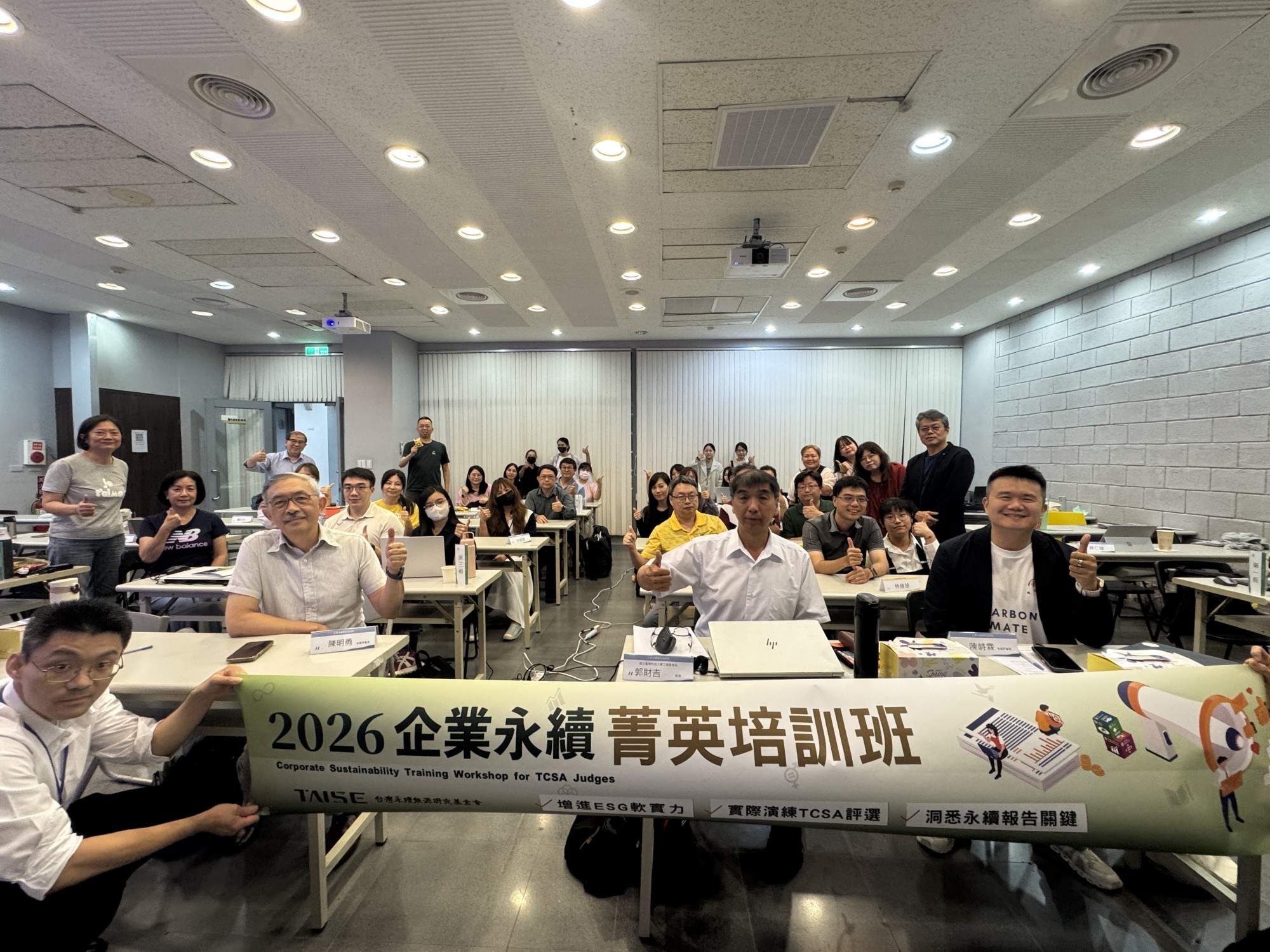
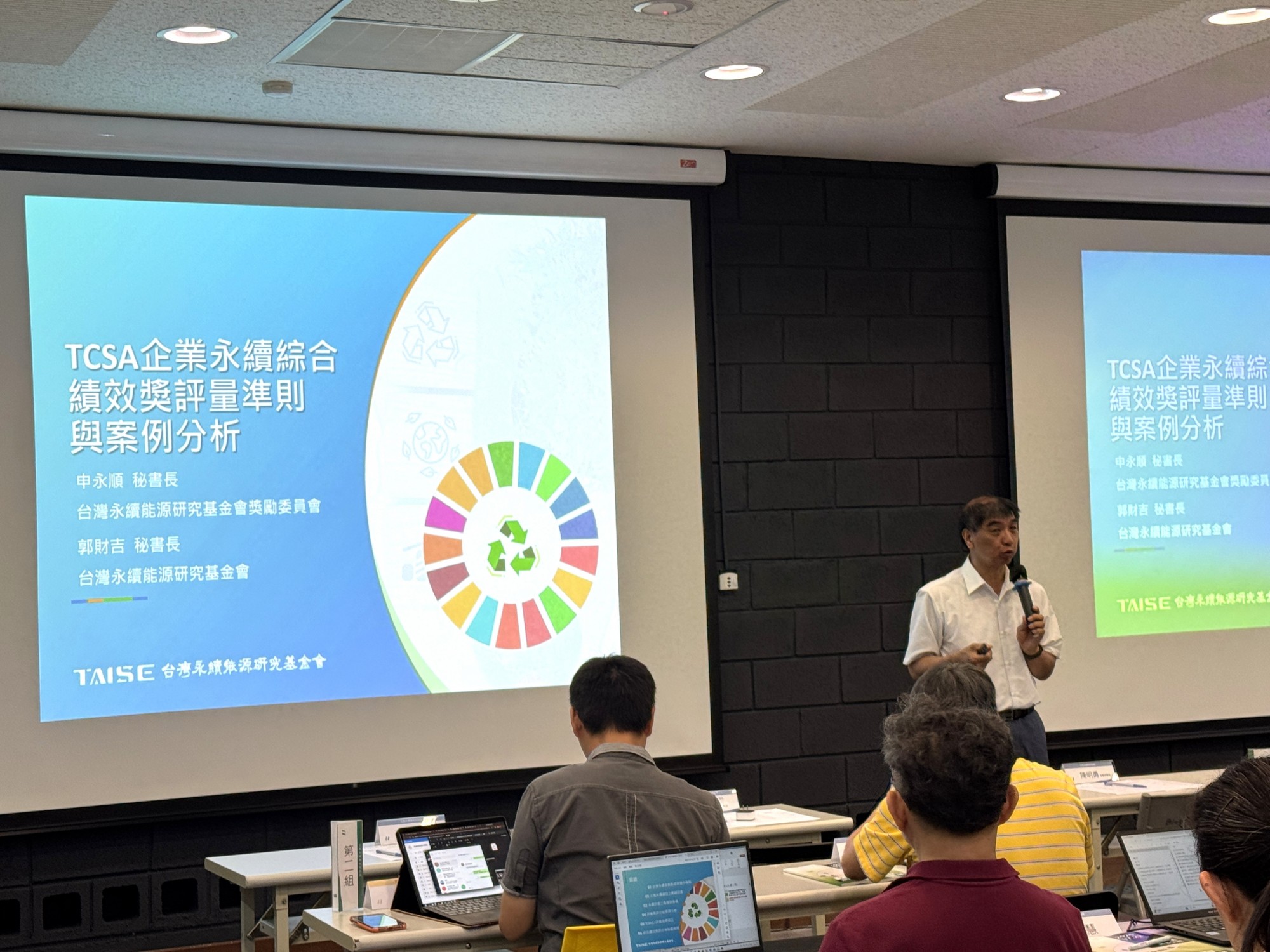
Professor Kuo pointed out that the TCSA 2.1 evaluation criteria have undergone structural revisions, closely integrating the latest sustainability disclosure standards, including TCFD, TNFD, SASB, and IFRS S1 and S2.
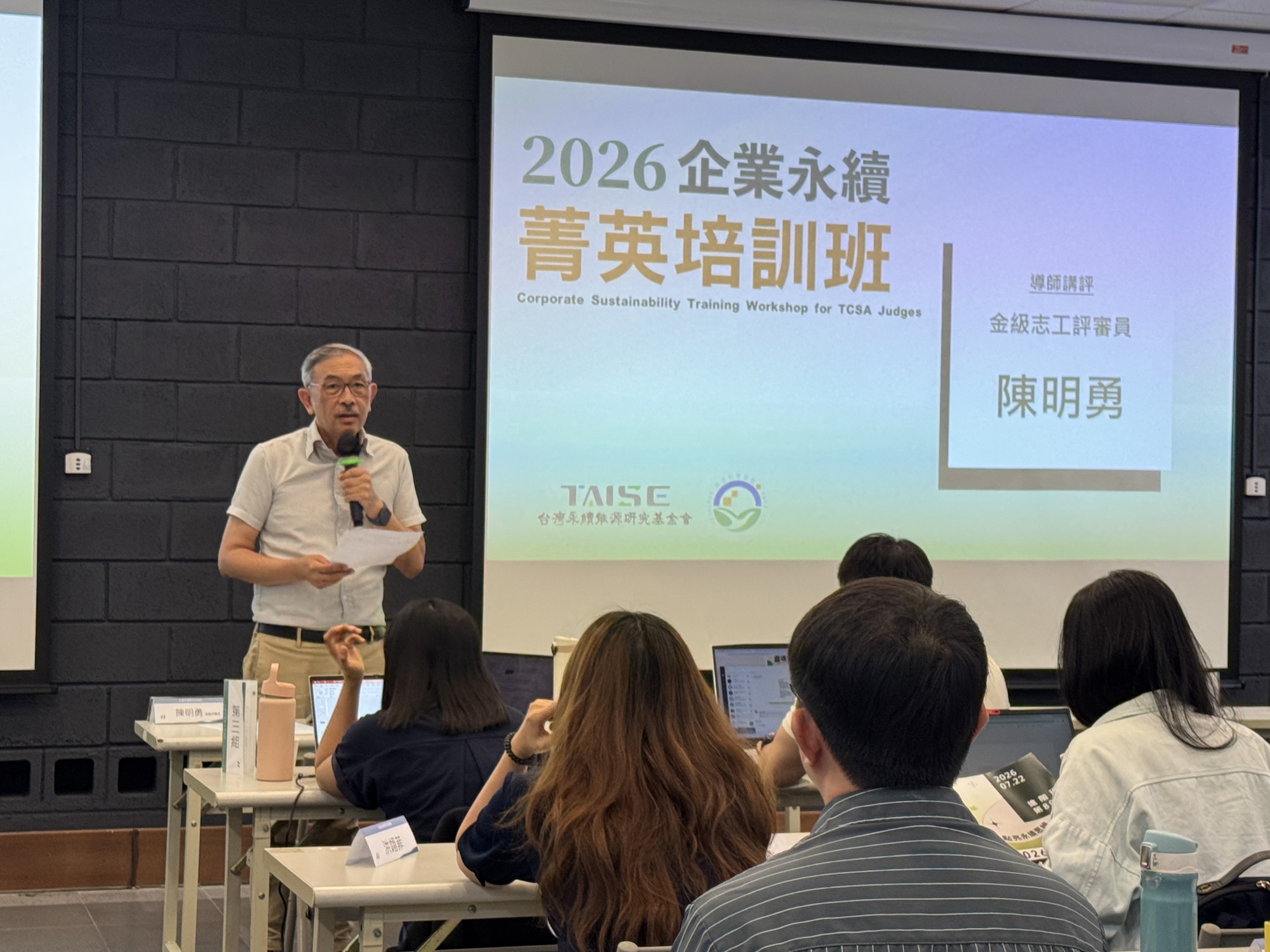
Gold-Level Volunteer Evaluator Chen provided feedback to participants during the hands-on evaluation exercises.
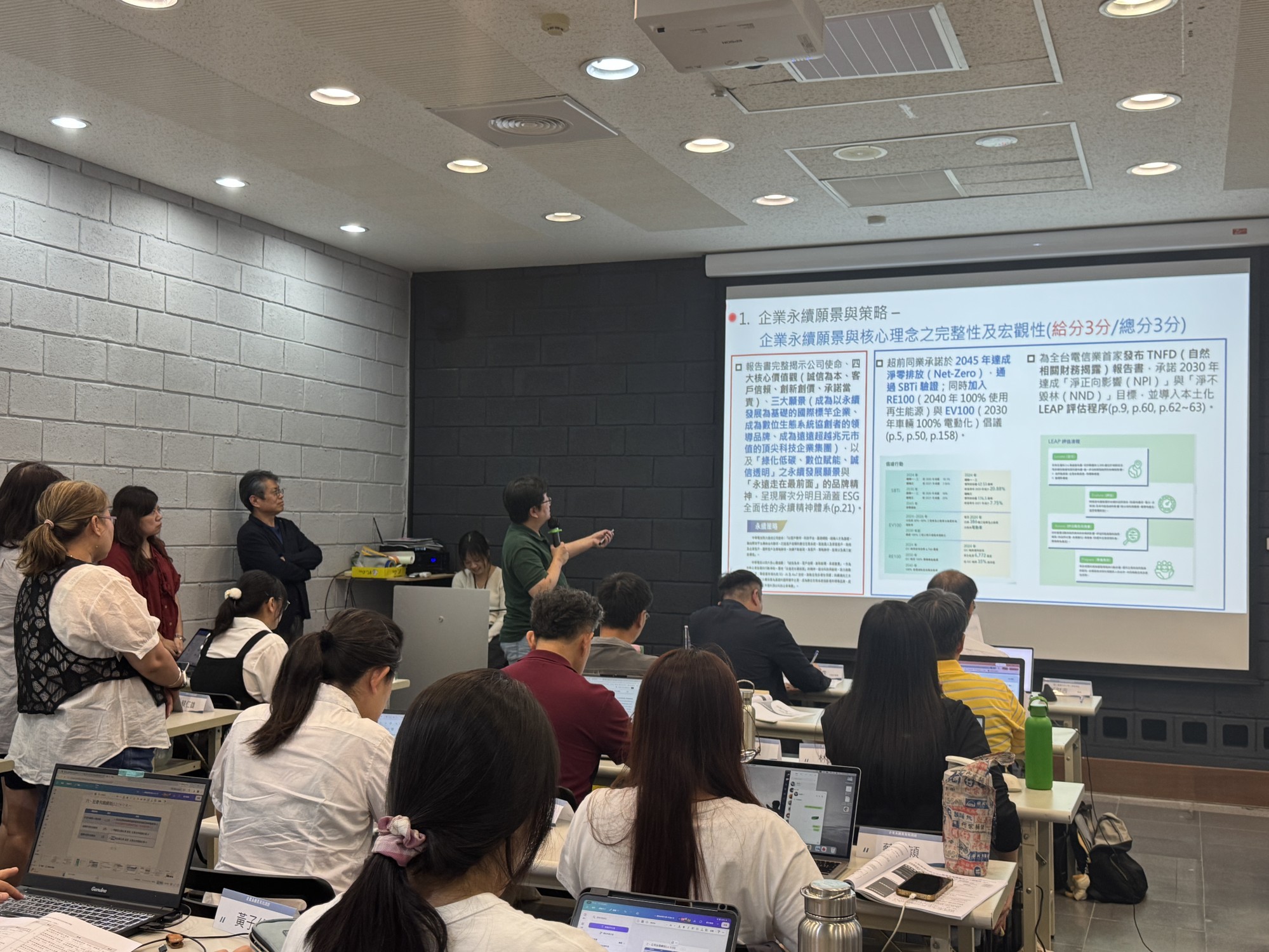
During the practical exercises, participants reviewed corporate sustainability reports, evaluated performance indicators, and delivered group presentations.