

Increased Weighting for Climate Governance and Energy Management in Sustainability Evaluations! TAIS
Increased Weighting for Climate Governance and Energy Management in Sustainability Evaluations!
TAISE Partners with Hsinchu Science Park to Organize the Corporate Sustainability Elite Training Program
Amid intensifying global political and economic instability and increasingly extreme climate conditions, corporate sustainability has become a critical factor determining long-term corporate competitiveness and strategic positioning. The Taiwan Institute for Sustainable Energy (TAISE), in collaboration with the Hsinchu Science Park Bureau under the National Science and Technology Council (NSTC), organized the "Corporate Sustainability Elite Training Program – Advanced Course," attracting enthusiastic participation from 38 corporate professionals across various industries and disciplines. Participants gathered to strengthen their corporate sustainability governance knowledge and practical capabilities.
Advancing Toward the CS 3.0 Sustainability Strategy
Strengthening Climate Governance and Internal Carbon Pricing Mechanisms
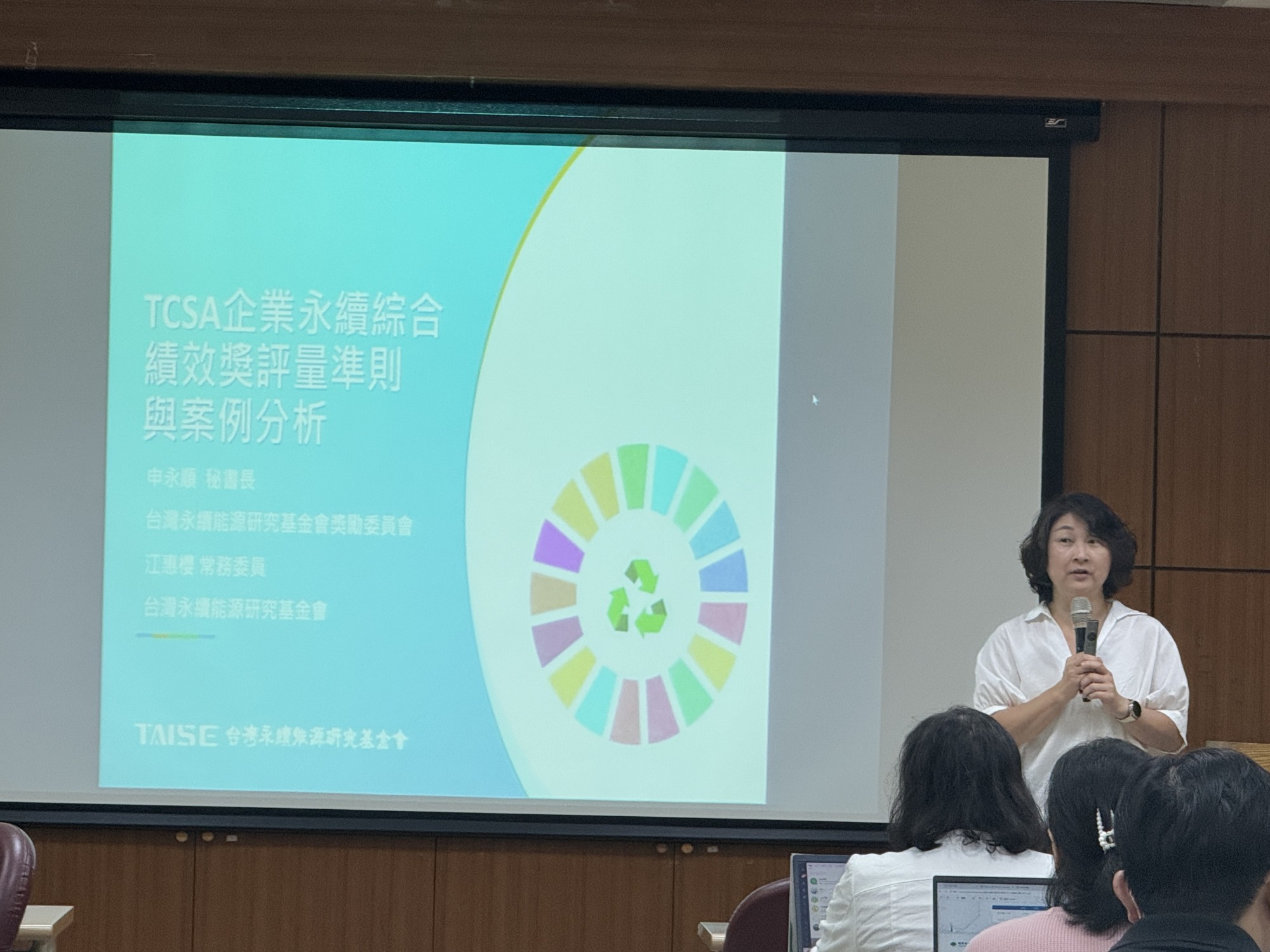
During the first session, Executive Committee Member Chiang of the Taiwan Institute for Sustainable Energy emphasized that corporate sustainability has evolved from the traditional corporate social responsibility (CSR) approach centered on social philanthropy to the CS 3.0 strategic mindset, which focuses on integrated strategies that create business value by addressing environmental and social challenges.
Executive Committee Member Chiang noted that under the Foundation's latest TCSA 2.1 evaluation framework, the weighting assigned to "Climate Governance and Energy Management" has increased to 15%. Companies should strengthen oversight of climate-related risks through the Task Force on Climate-related Financial Disclosures (TCFD) framework and actively participate in international initiatives such as internal carbon pricing (ICP), the Science Based Targets initiative (SBTi), and RE100. In addition, the evaluation criteria emphasize integrating the United Nations Sustainable Development Goals (SDGs) into core corporate products and business model innovation. Companies are encouraged to establish medium- and long-term SDG objectives at the board governance level to drive comprehensive sustainability transformation.
Leveraging the Influence of Sustainability Benchmarks
Driving a Cross-Sector Sustainability Paradigm Shift
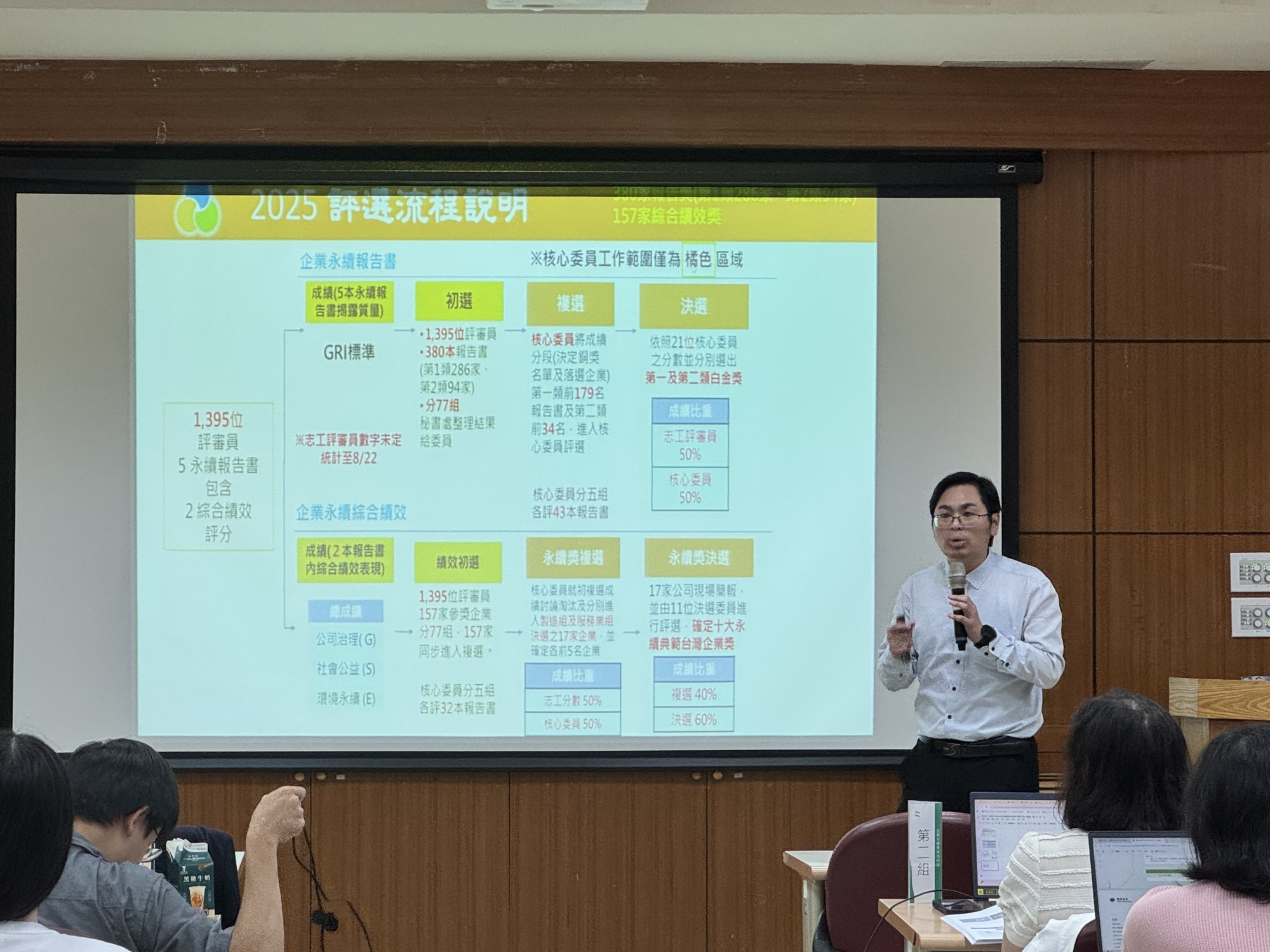
The second session was delivered by CEO Cheng of the Taiwan Institute for Sustainable Energy, who provided an in-depth analysis of the evaluation process and influence of the TCSA Taiwan Corporate Sustainability Awards. CEO Cheng explained that the evaluation criteria for the Comprehensive Performance Award focus on the overall performance of sustainability management. The award serves not only as a prestigious recognition for companies but also as a vital bridge for advancing sustainable development throughout society. The scope of the awards has expanded to encompass companies, universities, hospitals, NGOs, and government institutions, with the aim of promoting healthy competition through a transparent and credible evaluation process.
The Foundation has trained more than 3,400 volunteer evaluators, who have become a key driving force in promoting cross-sector sustainability learning and paradigm shifts. CEO Cheng encouraged participants to seize this year's final opportunity to complete the training and obtain volunteer evaluator qualifications.
Practical Exercises and Mentor Feedback
Cultivating Future Sustainability Governance Professionals
The training program featured hands-on exercises in evaluating comprehensive sustainability performance. Senior Advisor Ku of the Taiwan Institute for Sustainable Energy, Gold-Level Volunteer Evaluator Chen, Gold-Level Volunteer Evaluator Chen, and several other experienced evaluators served as mentors, guiding participants through practical exercises and presentations of their evaluation results. Gold-Level Volunteer Evaluator Chen emphasized that responsible evaluators who use artificial intelligence (AI) tools to assist in reviewing sustainability reports must still ensure that the results are examined by qualified professionals. She reminded participants of the saying, "Water can carry a boat, but it can also overturn it," highlighting both the benefits and potential risks of AI tools. Participants also shared that although they had previously considered sustainability an abstract concept, the hands-on training helped them develop a clearer understanding of ESG indicators and establish systematic knowledge of sustainability.
The Taiwan Institute for Sustainable Energy stated that it will continue to deepen its collaboration with science parks and industries across various sectors, cultivating more high-quality sustainability professionals and jointly driving Taiwan's industries toward net-zero emissions and sustainable development goals.
Event Highlights
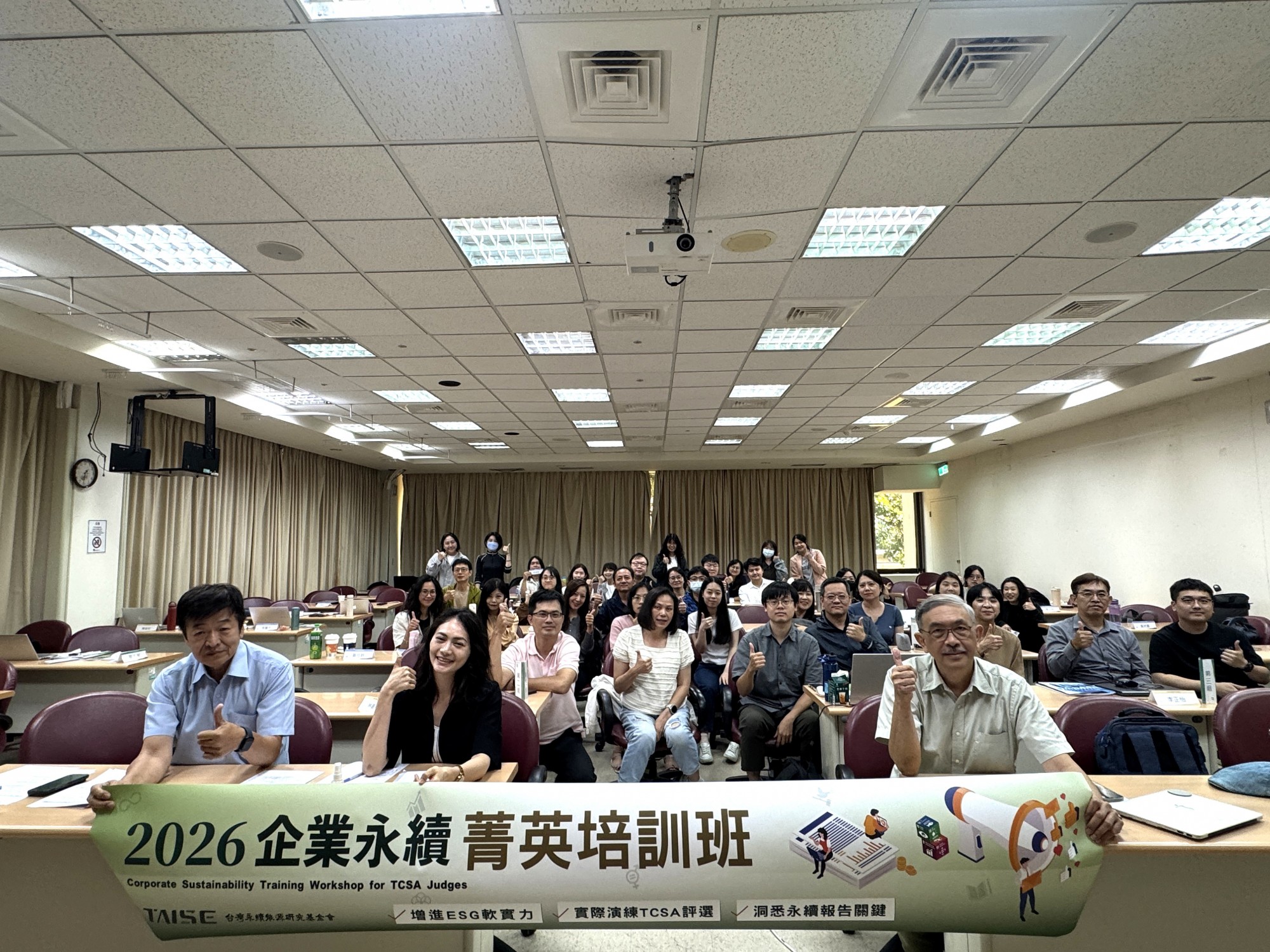
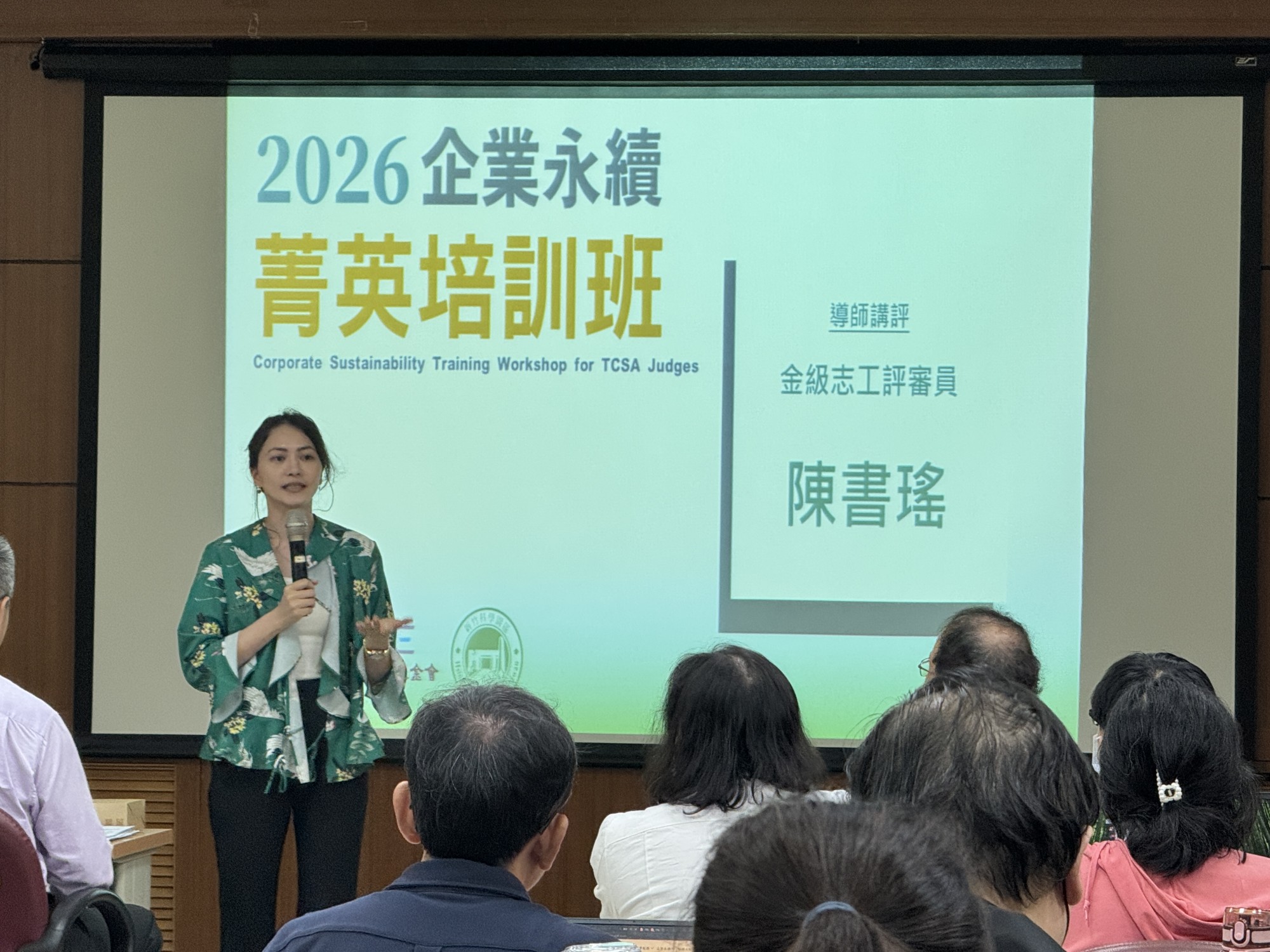
Gold-Level Volunteer Evaluator Chen reminded participants that responsible evaluators who use AI tools to assist in reviewing sustainability reports must still ensure that the results are examined by qualified professionals.
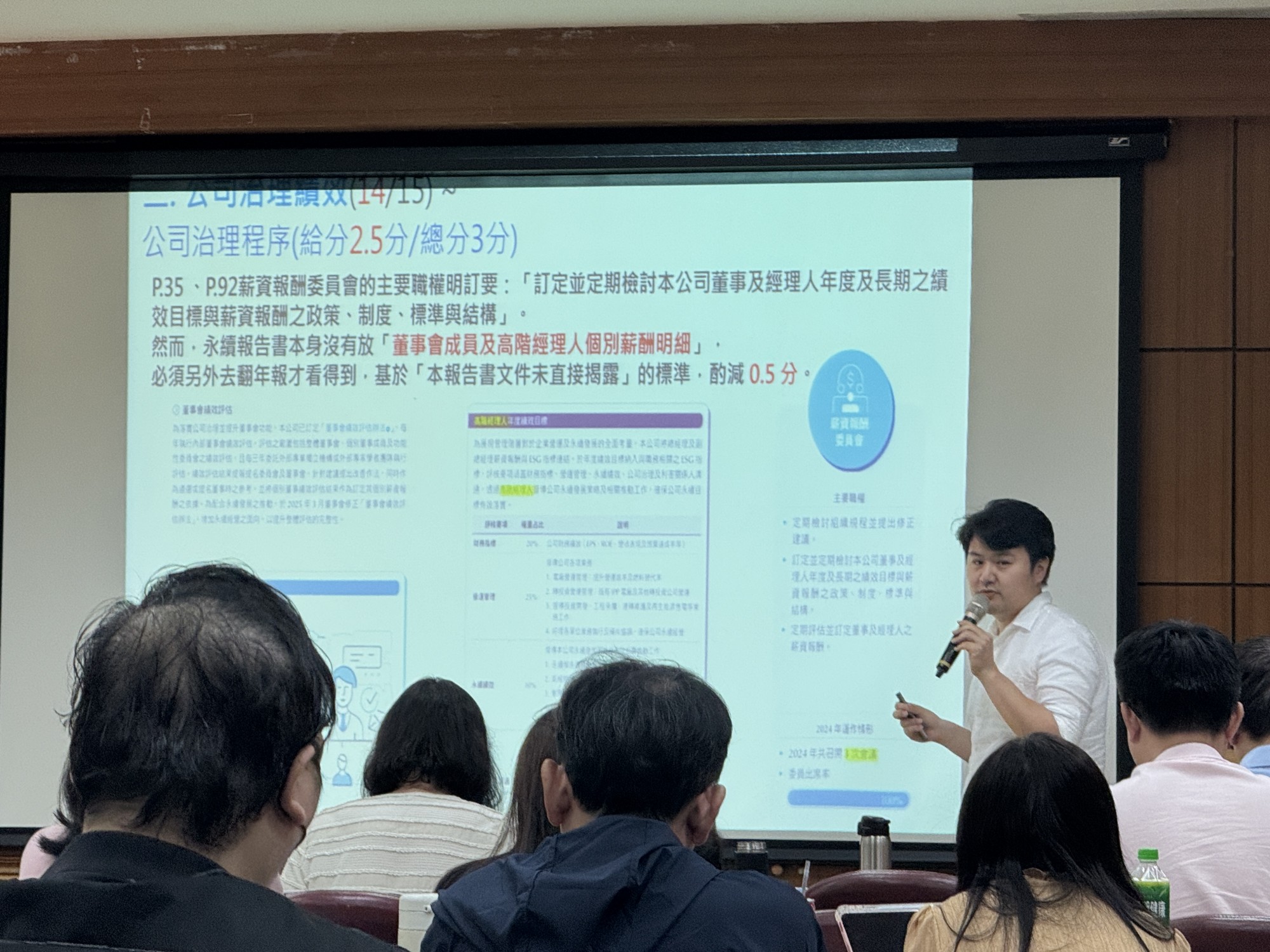
Participants engaged in practical exercises for the Comprehensive Performance Award, presenting their unique insights and scoring rationales for various evaluation indicators.