

Taiwan Sustainable Architecture Awards 2025: Platinum Honors for TSMC, CTCI, and E.SUN Bank
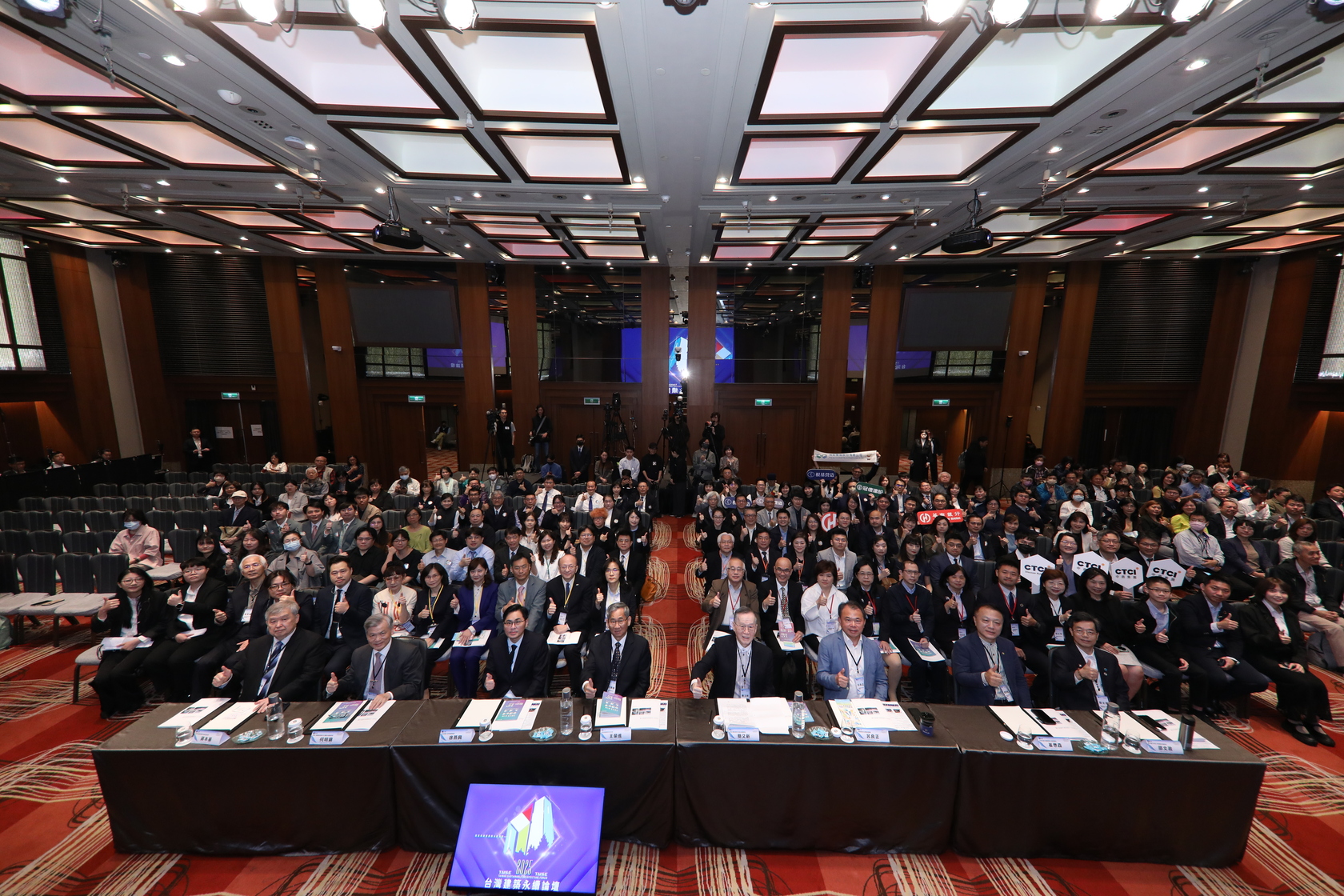
TAISE 2025 Taiwan Sustainable Architecture Forum & Awards Ceremony
Global Sustainable Architecture Trends and Taiwan’s Leading Practices: 2025 Taiwan Sustainable Architecture Forum & Awards Ceremony
TAISE Launches Inaugural Sustainable Architecture Awards, Recognizing Taiwan’s Leadership
With climate change placing growing pressure on ecosystems worldwide, the building sector has become one of the largest sources of energy consumption and carbon emissions. The transition to sustainable architecture is not only a global trend but also a critical pathway to achieving climate goals. According to the United Nations, buildings account for around 38% of annual global greenhouse gas emissions. In response, the Taiwan Institute for Sustainable Energy (TAISE) held the inaugural Taiwan Sustainable Architecture Awards and hosted the 2025 Sustainable Architecture Forum. The event highlighted the achievements of Taiwanese companies and professionals in advancing sustainable building, and examined the latest global developments in this field.
The forum brought together leaders from industry, government, and academia to explore international trends and future directions in sustainable architecture, while also sharing emerging policy tools and strategies. Experts from overseas building and environmental organizations contributed forward-looking insights on how to accelerate progress toward net-zero buildings and a more environmentally friendly society.
Global Trends and Taiwan’s Response
In his opening remarks, TAISE Chair Eugene Chien emphasized that buildings account for nearly 40% of global carbon emissions, which makes the sector central to global climate action. He noted that as awareness of climate change grows, more countries are adopting green building standards and encouraging low-carbon development through policy tools. In commercial and residential real estate, this has led to a visible “green premium” for sustainable properties and a “brown discount” for buildings that lag behind, underscoring the growing importance of sustainability in the market.
Chien added that the Taiwan Sustainable Architecture Awards were created to recognize projects and organizations that have delivered outstanding results in low-carbon and environmentally friendly building. The awards signal Taiwan’s active engagement in global sustainable architecture and invite the industry to accelerate the shift toward low-carbon, energy-efficient, smart, and healthy buildings.
Another keynote speaker, Director-General Jung-Chin Wang of the Architecture and Building Research Institute under the Ministry of the Interior, underlined that in order to support Taiwan’s 2050 net-zero target, the ministry is preparing a “Net-Zero Buildings Flagship Program” to speed up emissions reductions. The program focuses on improving building energy performance and advancing the development of net-zero buildings.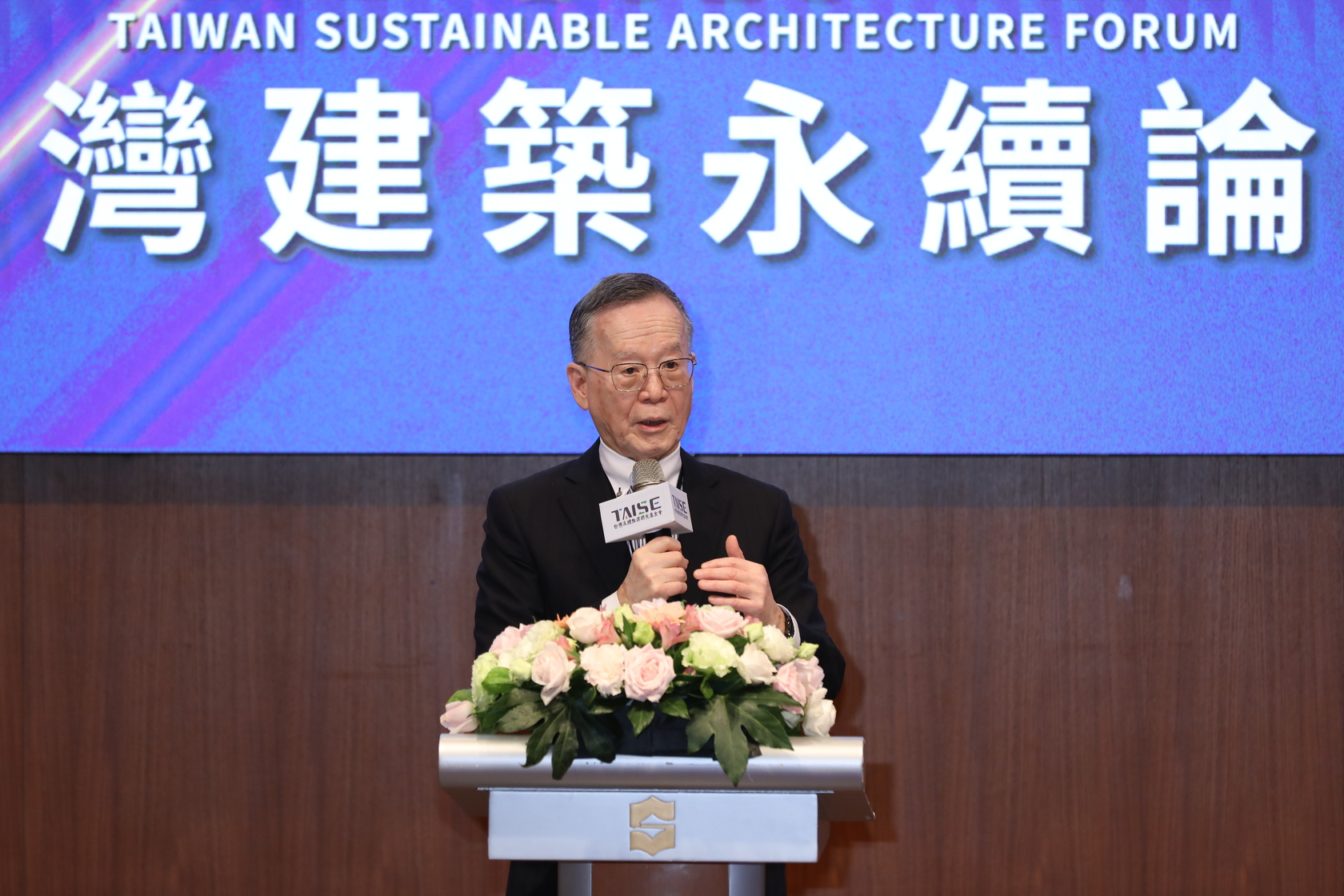
TAISE Chair Eugene Chien encouraged Taiwan’s building sector to accelerate the transition to low-carbon, smart buildings.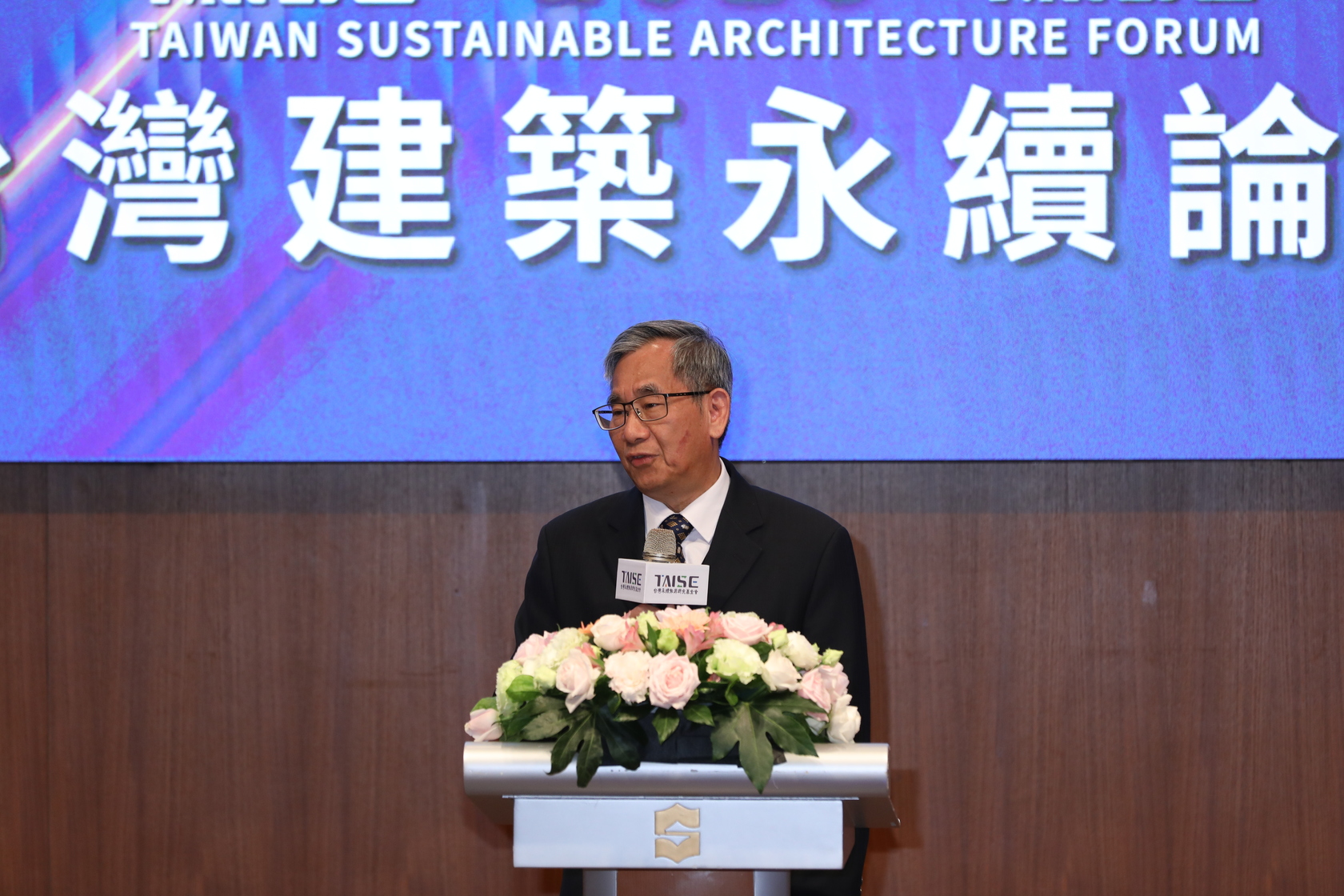
Jung-Chin Wang, Director-General of the Architecture and Building Research Institute, highlighted the ministry’s forthcoming Net-Zero Buildings Flagship Program to support the 2050 net-zero goal.
TSMC, CTCI, and E.SUN Bank Receive Platinum Honors
In the inaugural round of awards, four commercial office projects developed by companies including Taiwan Semiconductor Manufacturing Company (TSMC), CTCI Corporation, and E.SUN Commercial Bank received the Platinum Award in the Project Category. These buildings demonstrate exemplary performance in green design, energy efficiency, and environmental friendliness. In the Organization Category, firms such as Continental Engineering Corporation, Kindom Construction, Mutual Construction, Ruentex Engineering & Construction, and Highwealth Construction were honored as model organizations. Their efforts in sustainable and low-carbon building have set important benchmarks for the sector in Taiwan.
Alongside these model organizations, the awards also recognized projects that delivered notable results in water resource management, smart lighting systems, and the use of green building materials. Several winning buildings have already reached net-zero performance and achieved top ratings under the Building Energy Rating System (BERSe). These projects meet stringent environmental requirements and also enhance the quality of life and work for their occupants.
Mapping the Future of Sustainable Architecture
In a keynote speech, Deputy Director-General Yen-Hsing Hsu of the National Land Management Agency stressed that the Taiwanese government is formulating new policies and regulations to support sustainability in the building industry. He explained that as attention to carbon emissions and energy use in the sector grows, the government will continue revising relevant laws and tightening oversight of sustainable building design and construction. He also pointed out that Taiwan will need deeper international collaboration and further development of green finance in order to stay on track toward net-zero emissions.
Liang-Cheng Lu, President of the Taiwan Association of Construction Safety, spoke about how the construction industry can strengthen its influence in delivering low-carbon, energy-efficient, healthy, and smart buildings. He argued that the sector needs to embed environmental, social, and governance (ESG) principles more systematically in design and construction, and use innovative technologies together with green finance to drive progress toward net-zero emissions and a more sustainable built environment.
Roger Tseng, Deputy General Manager of Continental Engineering Corporation, presented the company’s approach to innovative management and green building practices, which reflects its strong commitment to sustainable development. Wesley Siah, Chief Brand Officer at PKA Architects, shared how TSMC’s office buildings combine aesthetics with sustainability principles to create spaces that harmonize with their surroundings. CTCI Group CEO Ko-An Wu discussed how large-scale engineering projects can adopt green technologies in ways that deliver both economic value and environmental benefits.
Diversified Pathways to a Sustainable Built Environment
The first Taiwan Sustainable Architecture Awards showcased a wide range of successful projects. Winners included commercial offices, industrial facilities, residential developments, and public buildings, representing multiple building types. These projects not only reflect global sustainable development trends but also apply advanced low-carbon and energy-saving technologies, while emphasizing smart and healthy design concepts. As a result, they enhance both the environmental performance and the economic value of buildings.
TAISE noted that it will continue to organize the Taiwan Sustainable Architecture Awards and further promote sustainable design and implementation across the industry. Through ongoing exchange and collaboration, the institute aims to strengthen Taiwan’s presence on the global stage and encourage more companies and professionals to take part in sustainable building efforts. The goal is to expand impact and lay a solid foundation for the next generation of green and smart buildings. TAISE also invites stakeholders from across the building sector and other fields to join the 2025 Asia-Pacific Sustainability Expo, share their achievements, and deepen dialogue with society.
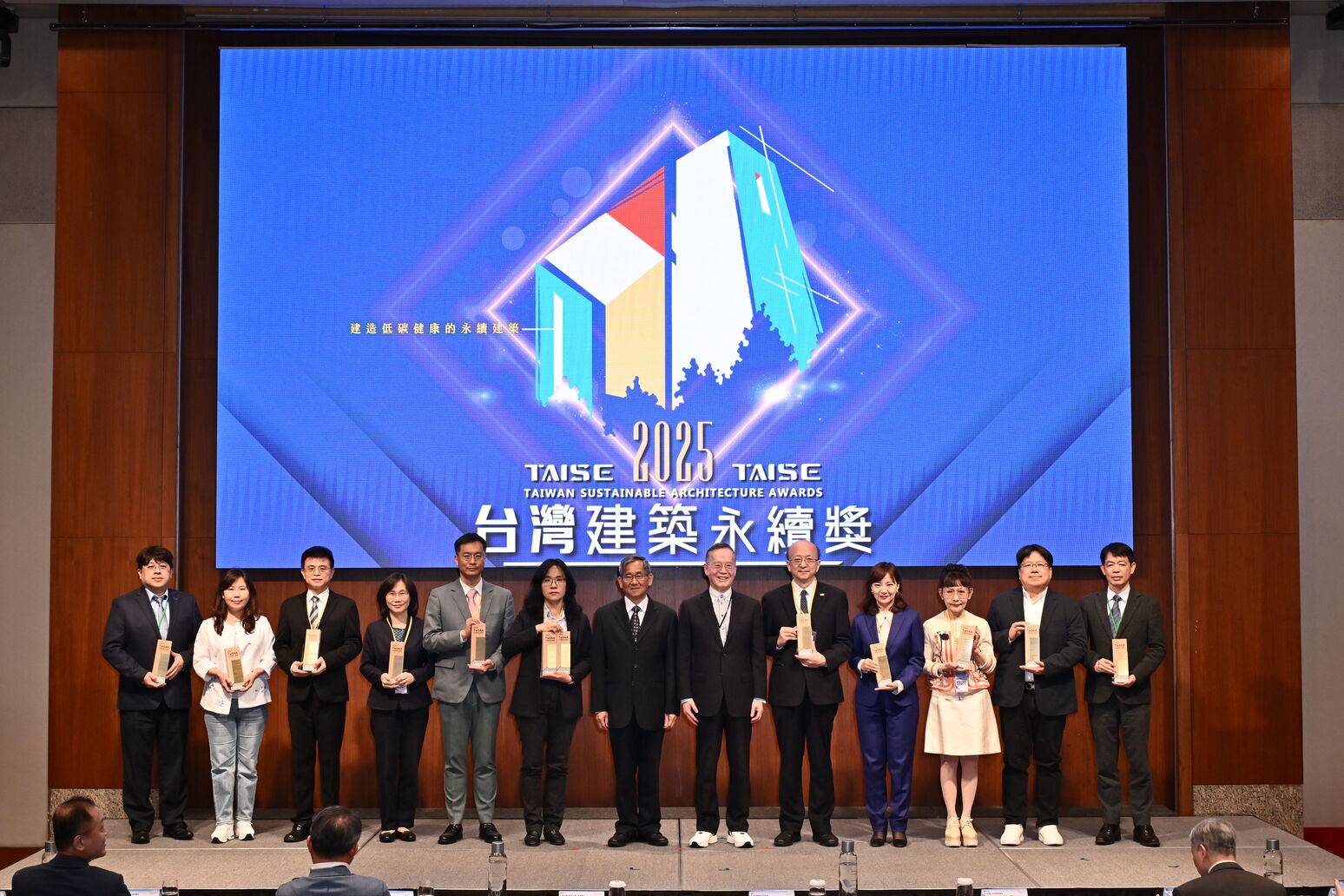
TAISE Chair Eugene Chien (sixth from right) and Jung-Chin Wang, Director-General of the Architecture and Building Research Institute (center), present the first group of awards for the 2025 Taiwan Sustainable Architecture Awards.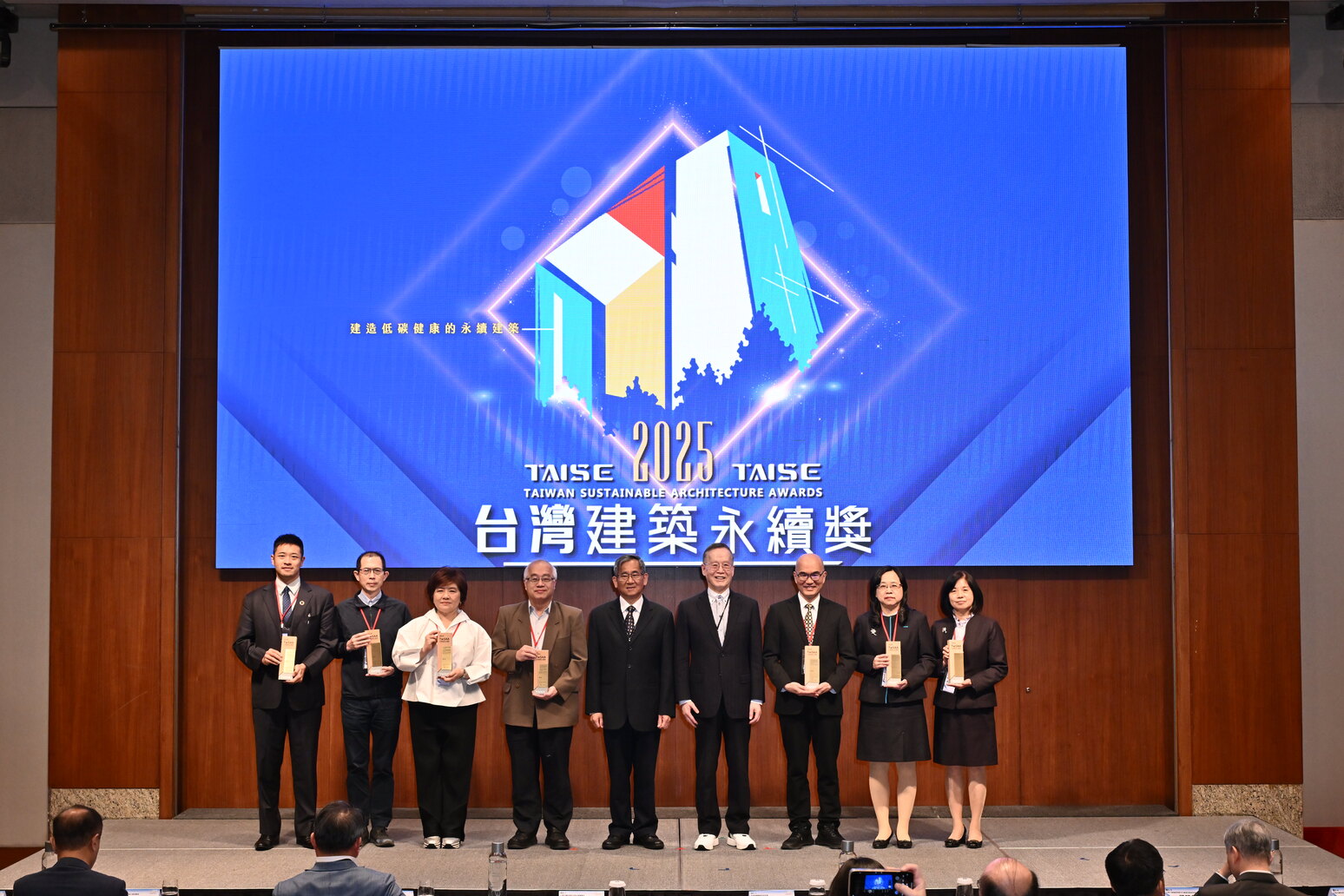
TAISE Chair Eugene Chien (fourth from right) and Director-General Jung-Chin Wang present the second group of awards for the 2025 Taiwan Sustainable Architecture Awards.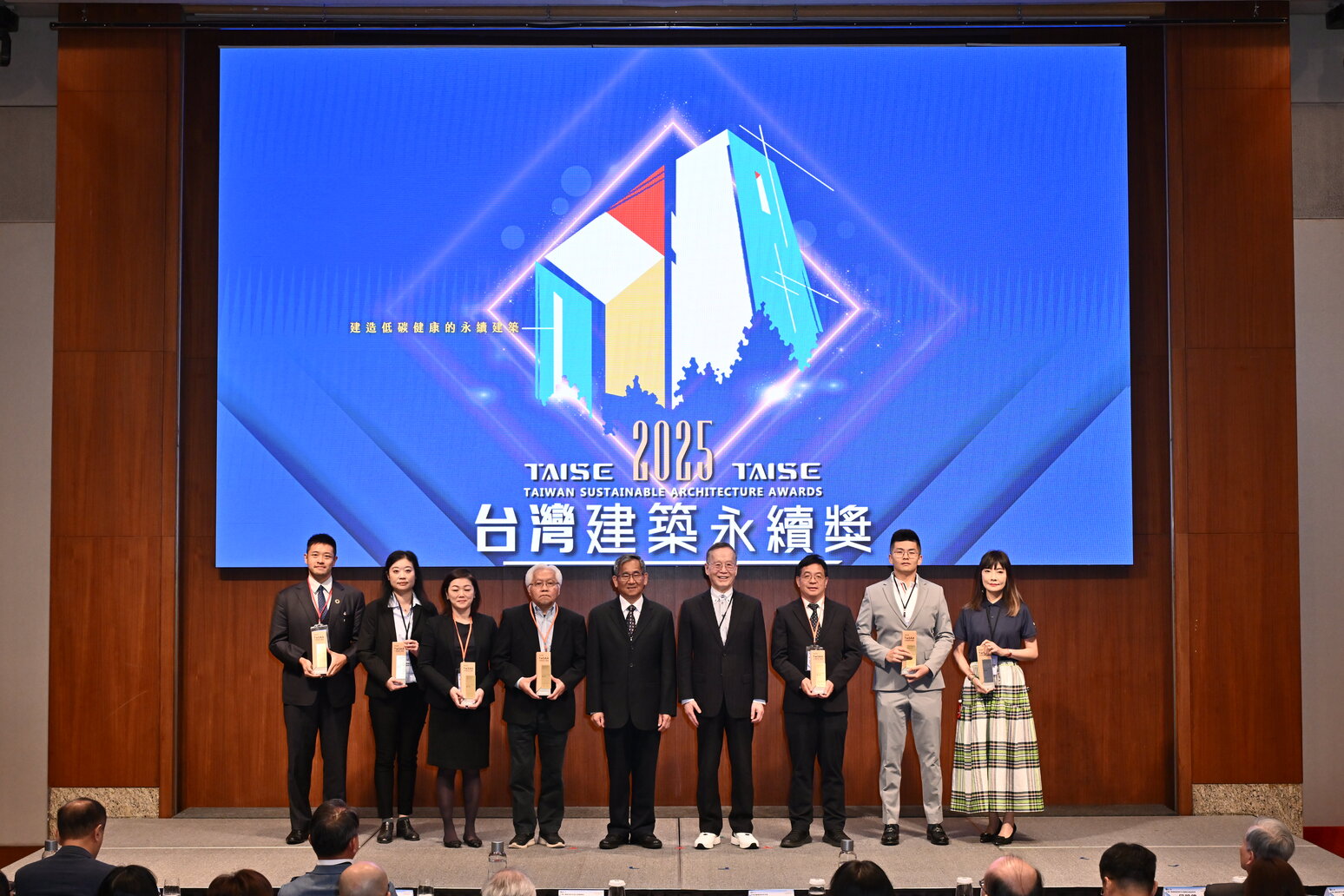
TAISE Chair Eugene Chien (fourth from right) and Director-General Jung-Chin Wang present the third group of awards for the 2025 Taiwan Sustainable Architecture Awards.